
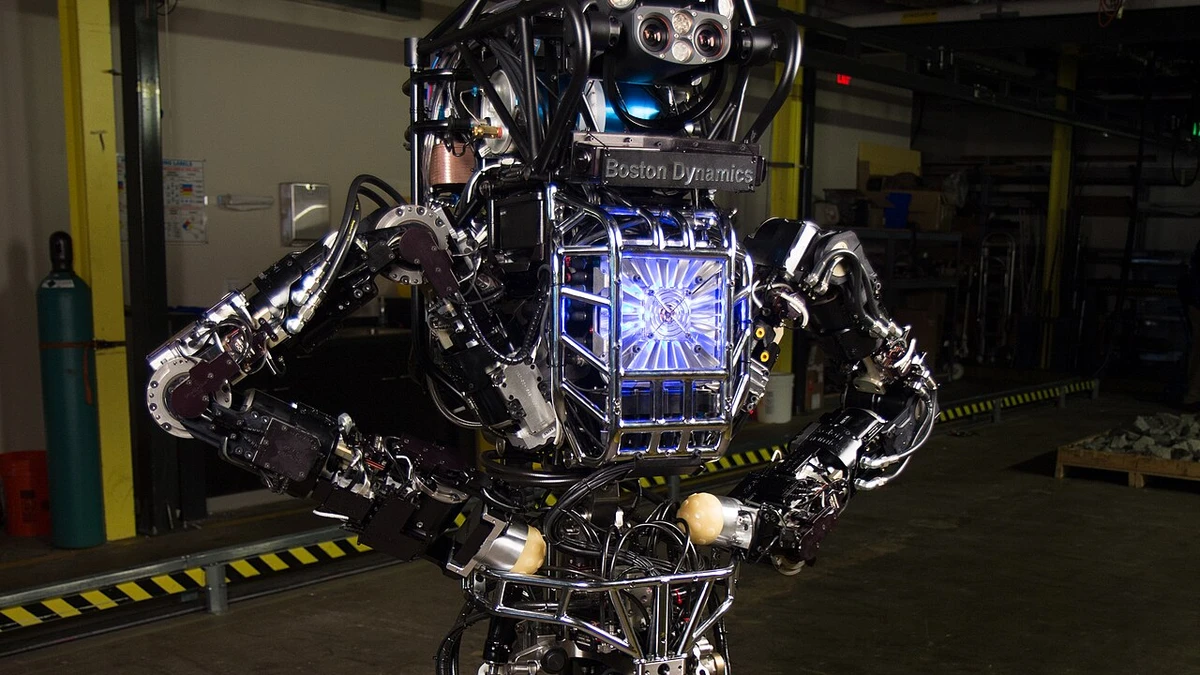
San Francisco / New York (Special Report - Maryam Naqvi): The year 2026 has emerged as a watershed moment in the history of artificial intelligence. According to major global research releases and enterprise technology audits, the industry has fundamentally shifted beyond basic large language models (LLMs) answering prompt queries to full-scale autonomous Agentic AI and physical robotic embodiment.
The Leap to Agentic AI: Autonomous Digital Coworkers
Unlike traditional generative models that require continuous prompting, Agentic AI systems are goal-oriented. When given high-level business objectives, they autonomously devise step-by-step strategies, execute actions across independent software ecosystems (CRMs, databases, and cloud infrastructures), and perform self-correction if roadblocks occur. Major tech giants including Microsoft, Google, and Meta are embedding these capabilities into enterprise platforms, driving up to a tenfold boost in operational throughput.
Physical AI and Humanoid Robotics on the Factory Floor
Equally transformative is the rapid convergence of software intelligence with physical robotics. Through Vision-Language-Action (VLA) architectures and real-time physics simulators like NVIDIA's AlpaSim, advanced humanoid robots such as Boston Dynamics' Atlas are undergoing active deployment in automotive manufacturing and smart logistics. These robots utilize spatial chain-of-thought reasoning to adapt to unpredictable real-world environments safely.
Strategic Implications for Pakistan's IT Sector
This technological leap carries profound implications for Pakistan's expanding technology ecosystem. With IT export earnings recently crossing the $4.6 billion benchmark, local companies and young developers face an unprecedented opportunity to transition from low-cost coding tasks to high-value Agentic workflow integration, semiconductor verification, and AI cloud architecture for global clients.